Business performance insights from the ETRC Index were supported by panel-based discussions between key stakeholders.
DF&TR airport value sales across the European continent were up 7% in the first three quarters of 2024 (January – September) to total €7.14 billion versus the same period pre-Covid (2019), according to the latest topline findings from the ETRC Business Performance Index.
The result is more flattering for the same period year-on-year, with growth of +9.6% in value sales versus the three quarters in 2023 against pax growth of +8.2%.
Tellingly, the figure is a marked improvement on the -1% in value sales recorded in Q3 2023 for the same comparison period.
However, unit sales continue to lag versus pre-Covid times – down -10% in Q3 2024 against the same quarter in 2019.
The value and unit sales performances were mirrored quarter-on-quarter in 2024 (Q2-Q3) at 7% and -10%, respectively.
Stephen Hillam, Managing Director at Pi Insight presented a timely and incisive run-down of the industry’s regional performance to ETRC Business Forum delegates this week.
The ETRC Index is curated exclusively for the association’s members courtesy of PI Insight drawing on retailer EPOS data and ForwardKeys Traveller Statistics (pax based on total international departing passengers from 849 European airports) and covers airside airport retail sales in four main categories: beauty, liquor, confectionery & fine foods, and tobacco.
This tops the 2019 sales result of €6.69bn, having registered €6.51bn in the three quarters (Q1, Q2, Q3) of 2023.
Spend per pax was up by 1.3% and 7.1% compared with the same periods in 2023 and 2019, respectively.
Hillam highlighted that the outlook for the industry remains positive, despite fluctuations in the various category dynamics.
Summarising, he spoke of stability, optimism and normality returning to the European DF&TR sector as evidenced by the aforementioned data in the three quarters of 2024.
A changing landscape
As reported, TRBusiness has been delivering live on-location reporting from this week’s ETRC Business Forum, curated under the theme ‘From Chaos to Clarity: Leading the Travel Retail Industry Forward’ and hosted in Amsterdam – – click here for an in-depth report on the retail leaders roundtable and catch-up with all the action via our LinkedIn feed…
Opening proceedings, Nigel Keal, President of ETRC said this year will be defined by the outcome of the European Parliament elections in 2024 and the renewal of Ursula von der Leyen’s mandate with a new team of Commissioners installed in December.
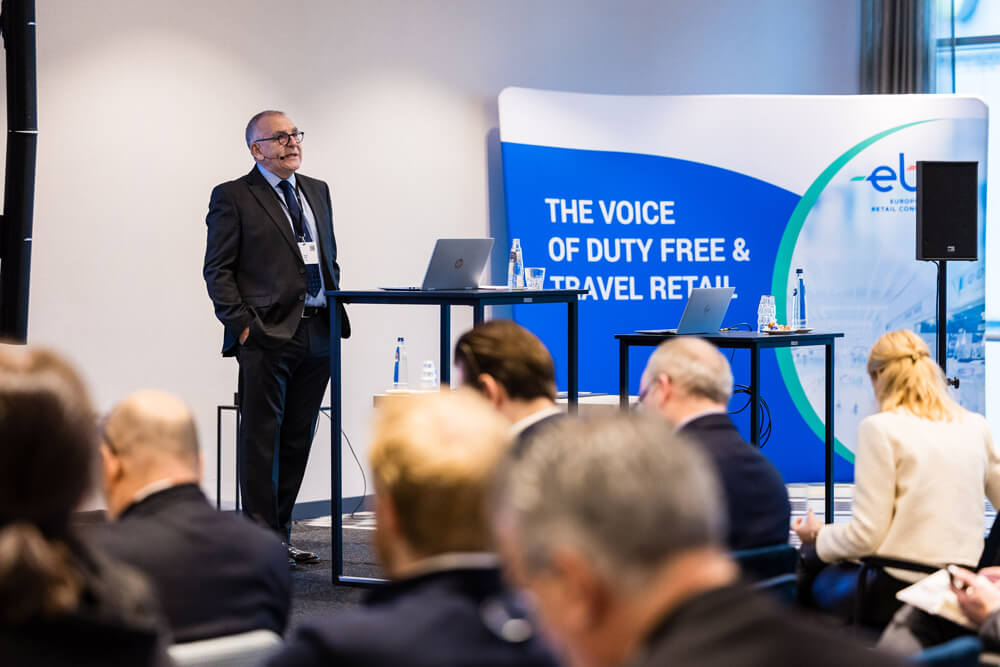
Nigel Keal, President, ETRC: “The Forum continues to be a vital platform for exchanging ideas, addressing challenges and shaping a sustainable and innovative future for European duty free and travel retail. ETRC aims to steer the industry towards a more collaborative approach, creating benefits for all business partners.”
Advocacy and legislation can take years to come to fruition, reminded Keal, so patience remains a virtue. According to the association, 2024 was by all accounts ‘less hectic’ from an advocacy point of view, allowing efforts to be channelled towards influencing the forthcoming regulatory and policy agenda in the EU under the auspices of the new Commission.
ETRC members heard about a new study assessing the economic impact on duty free being commissioned by interVISTAS.
Keal outlined the association’s key lobbying priorities moving forward, including the campaign for on-arrival duty free in the EU, which was put on hold in 2024 due to the aforementioned political changes.
A meeting with the commissioner for tourism and transport is scheduled for the coming weeks, ETRC members heard.
Regarding the campaign for arrivals duty free in the UK, which Keal updated on in his capacity as UK Travel Retail Forum Chair, he said the country hasn’t moved forward on its arrivals policy in a way the association would have hoped.
Regarding digital labelling, of long-term importance due to the exclusivity of products and the complexity of the duty free supply chain, Keal acknowledged that there had also been ‘very little traction’ with the Commission. On tobacco, he reminded members that 2025 is a ‘crucial year’.
ETRC, in consort with the Duty Free World Council, is spending time formulating its approach to rebut allegations of illicit trade in tobacco duty free, which will be on the agenda at the Fourth Meeting of the Parties to the Protocol to Eliminate Illicit Trade in Tobacco Products (MOP4) in November 2025.
For the uninformed, the WHO triggered an evidence-based research study under Article 13.2 of the ITP at the rescheduled Third Session of the meeting of the Parties (MOP3) held in Panama City on 12-15 February last year.
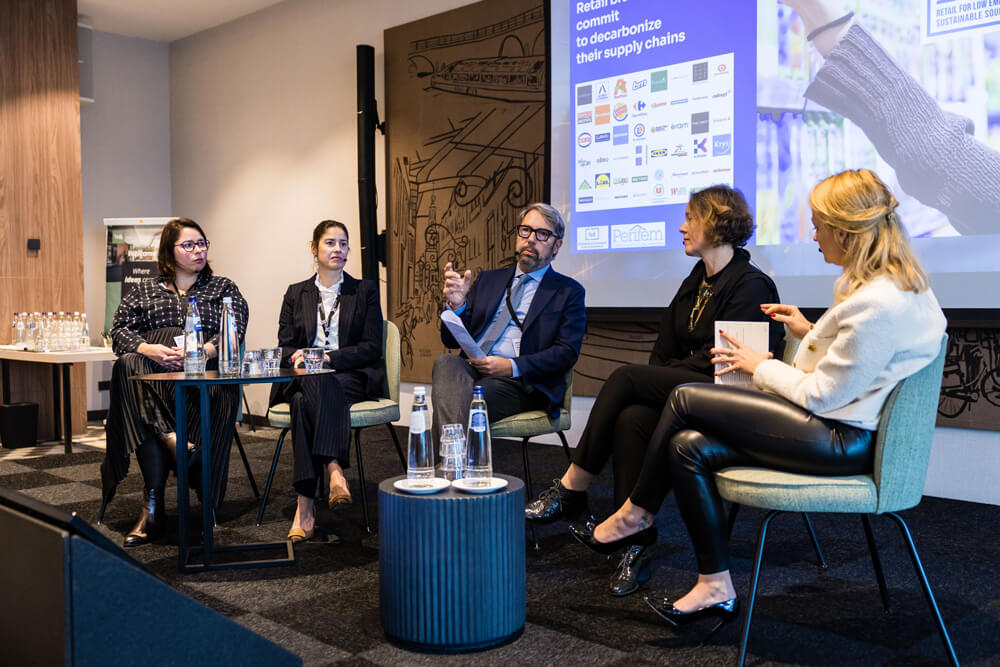
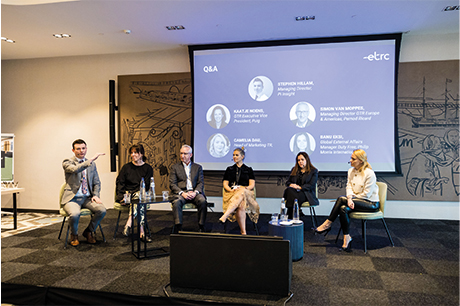
Left to right: Julie Lassaigne, Secretary General, ETRC; Saskia Möller, Director Legal, Compliance & Sustainability, Gebr. Heinemann; Camillo Rossotto, Chief Public Affairs and ESG Officer, Avolta; Laurence Pardieu-Duthil, Chief Sustainability Officer, L’Oréal Travel Retail; and moderator Nina Semprecht.
The WHO had postponed the study in 2018 at MOP1 where it was decided the study would be carried out within five years of the protocol’s entry into force (September 2018) and commence immediately. The instruction was that a roadmap on the duty free question should be produced within two years. No reference was paid to the study at MOP2 in 2021 – it is certain to be on the agenda in November 2025.
Keal also mentioned challenges regarding alcohol allowances and the need for clarity around these.
EU Green Deal: Is travel retail ready?
More broadly, he outlined how the Covid period was relevant in informing the future work of ETRC as regards its efficiency and coordination on advocacy areas. In this context, he stressed the importance of broadening ETRC’s alliances with other associations across Brussels to defend the DF&TR business, while expanding the network of lobbying agencies.
Director and CEO of Chatham House and respected journalist Bronwen Maddox offered a compelling personal view of the fault lines facing global geopolitics in the keynote address: ‘Where is Europe going after the EU elections in a fractured global order?’
She believes that people in the EU will continue to travel, but questions remain over the extent to which they are prepared to spend. She then addressed Europe in a contested global order and its challenges: competitiveness and cohesion; looming decisions on defence, sustainability, regulation (US and UK); and the new EU Commission and national elections.
Having recently attend the World Economic Forum in Davos, Maddox praised a speech delivered by Ukraine President Volodymyr Zelenskyy.
Uncertainty reigns in the US, she acknowledged. “Inflation is an immediate economic problem and the cost of living hugely affects elections. Inflation is already a huge problem for the US.”
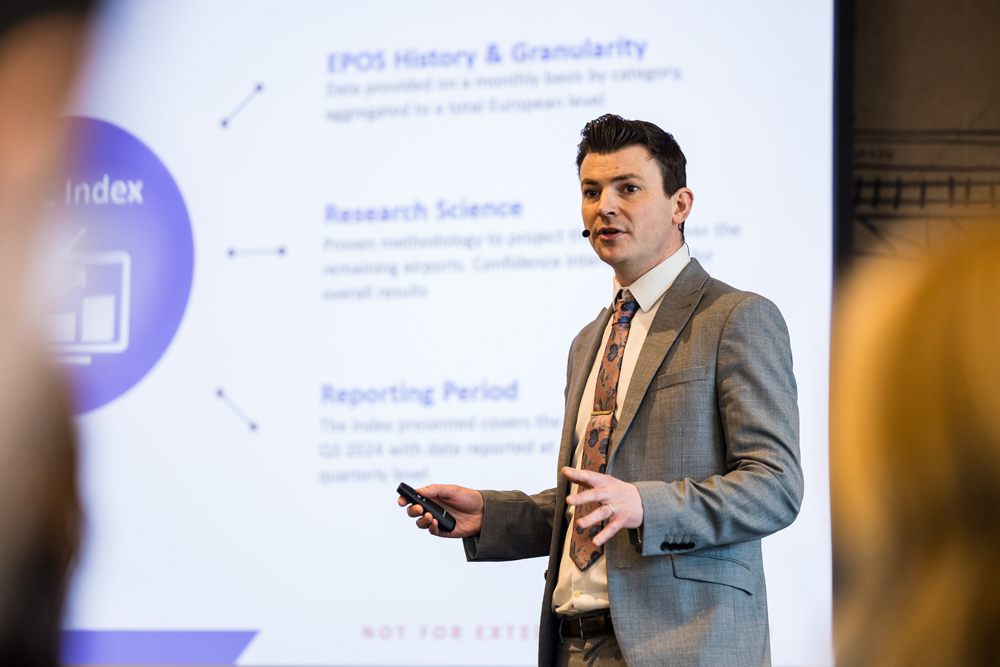
Stephen Hillam, Managing Director, Pi Insight offered a granular breakdown of category performance data for European DF&TR from the latest ETRC Index Q3 2024. Value sales for the European DF&TR sector were up by €1.73 billion for January – September 2024 against the same period in 2022.
In view of the Federal Reserve’s recent decision to hold firm on interest rates, she said the mood at Davos was one of huge confidence from a US perspective, but caveated that there exist huge constraints within the picture.
She alluded to the China-US relationship and the threat of tariff impositions; maintaining ties with both countries is tiring for governments and the businesses trading with them.
Against this backdrop are acute challenges with the Ukraine War and continued upheaval in the Middle East. While possible talks could head towards a long-term deal in Ukraine, questions remain over security guarantees.
“China and Russia are trying to create fault lines in Europe, be it on politics, trade or energy,” she said.
On the UK, there is a desire to improve trading relationships but the country has not acted particularly quickly in formalising its position, she noted.
Concluding, Maddox said there exists a big question over Britain’s ability to sharpen its competitiveness. This has been given urgency by the swirl of geopolitics, with uncertainty offering companies – more than governments – opportunities.
“There is an interconnectivity between companies and different governments […] as individual countries get more confident in positioning themselves,” she added.
In a Q&A with ETRC Vice President PR & Communications Nina Semprecht, Maddox said confronting and balancing the provision of information and policing its apparatus through social media presents a sizeable challenge for the EU, governments and companies, notably in understanding the increasing mobility of citizens and how this influences investment decisions, at the same time as cutting through regulation.
In a timely extension of a conversation during TR Sustainability Week, Julie Lassaigne set the scene for a panel discussion unboxing the EU Green Deal and whether the travel retail industry is ready for change.
Decisions around product offerings are intrinsically linked to the shifting regulatory landscape, new legislation and evolving consumer awareness, ETRC members heard.
Meeting sustainability requirements means a high level of cross-sector collaboration, as firms shape their own ESG and sustainability agendas in the move to net carbon zero by 2050, said Lassaigne.
“Airports, ports and the maritime sectors have their own challenges – it’s important we work with our partners to meet those challenges,” she said. “Travel retail is at the centre of a lot of sustainability changes. It has long been a key consideration and has probably been more in the spotlight in the last five years or so. Decisions in the shop are triggered by sustainability elements: product offerings very much depend on this factor but also hugely impacted by the regulatory landscape, which is influencing both the production, packaging, retail side but also consumer decisions.
“We at ETRC have been trying to understand this evolving landscape, recognise the role of businesses in driving sustainability recognition. I also think the European Commission and many governments recognise the power of businesses in driving these changes.”
The landscape is hugely complex, with a flurry of regulations, directives and instruments spanning the circular economy, waste and packaging, sustainable financing and reporting, carbon reduction and category-specific areas.
The EU Packaging and Packaging Waste Regulation (PPWR), which includes limits on packaging weight and minimum recycled content levels together with restrictions on single-use plastic packaging, will be significant in shaping the future of travel retail, explained Lassaigne.
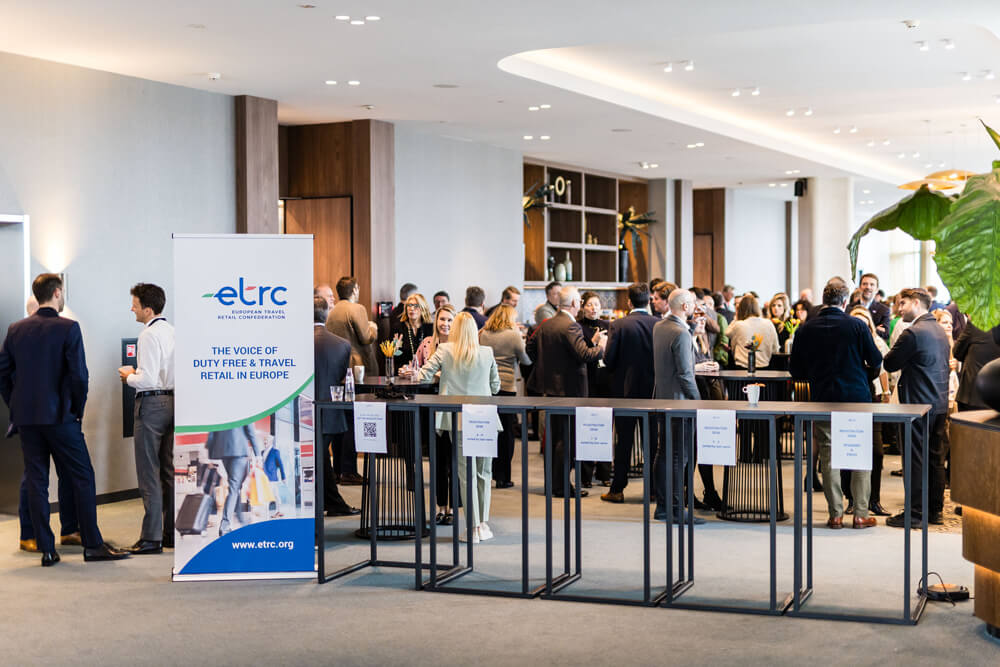
The ETRC’s annual gathering of members was held at the Van der Valk Hotel Amsterdam Zuidas on Thursday 30th January and drew a record-breaking 170 attendees from the European DF&TR sector.
There are hopes the legislation will give tolerance and introduce flexibility in duty free use cases. For example, products intended for gifting.
Interestingly, Lassaigne outlined how the EU is also focusing on the implementation of an EU Flight Emissions Label, due to be operational by mid-2025.
Airlines operating flights within the EU or departing from the EU will be able to voluntarily join the label. Passengers will be able to view and compare the estimated greenhouse gas emissions of their flights to enable more informed decisions.
The category view
Saskia Möller, Director Legal, Compliance & Sustainability, Gebr. Heinemann outlined the company’s commitment to sustainability in the context of its double materiality analysis, collaborating with business partners across the value chain to drive common objectives.
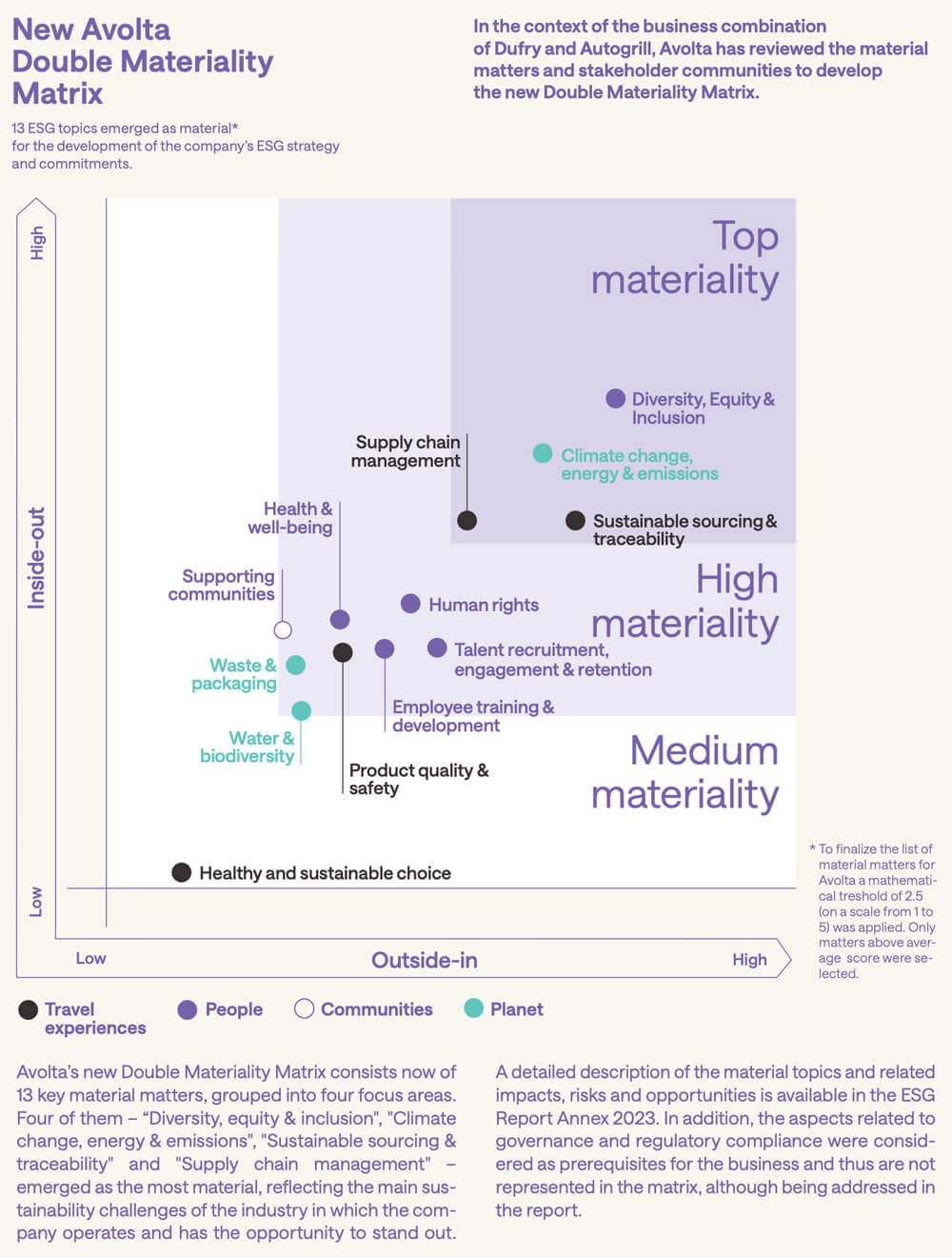
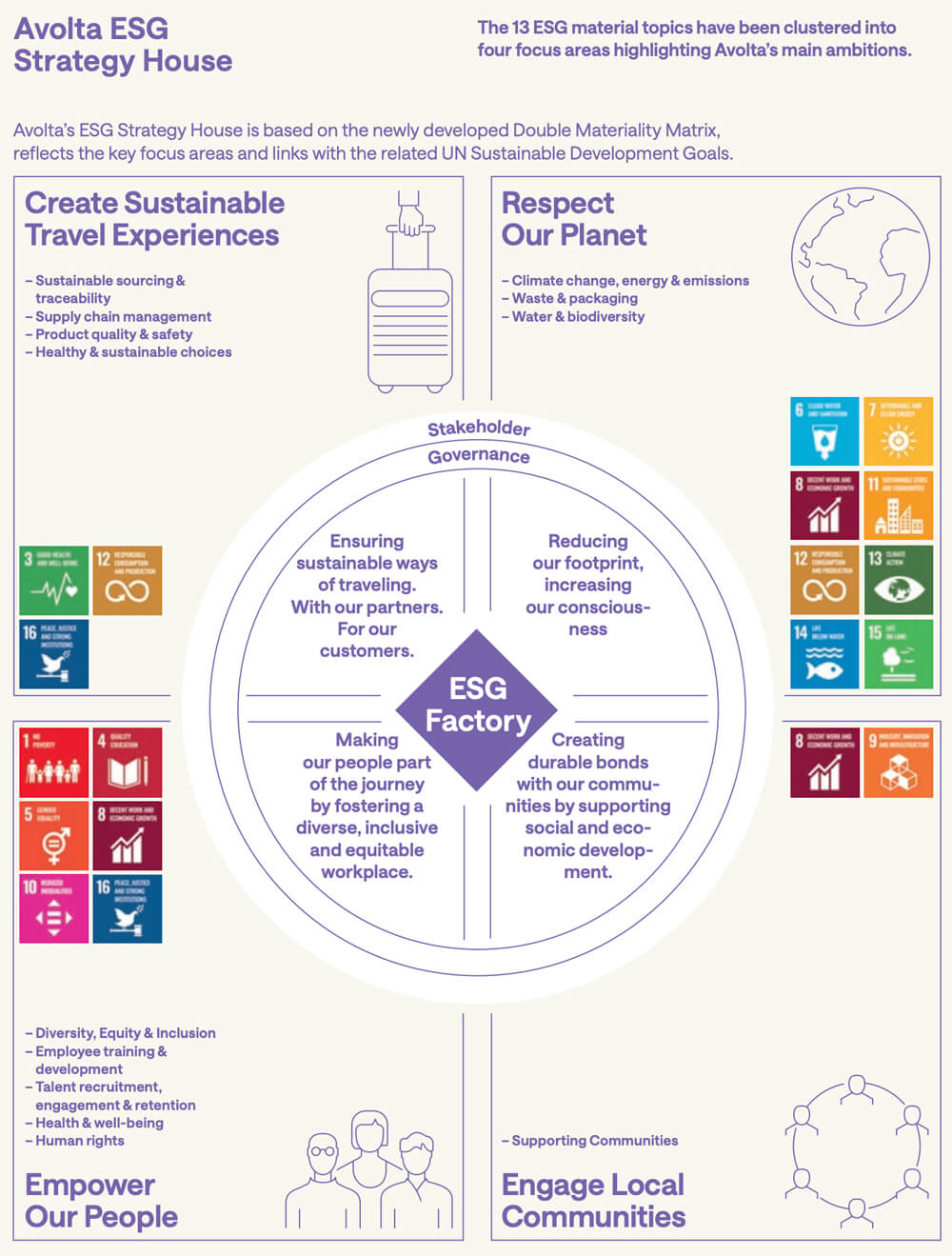
Camillo Rossotto, Chief Public Affairs and ESG Officer Avolta, described how the company’s ESG Strategy House is aligned to its Destination 2027 corporate strategy.
He made reference to the Airport Carbon Accreditation scheme and the importance of the industry to collectively address its Scope 3 emissions.
Laurence Pardieu-Duthil, Chief Sustainability Officer, L’Oréal Travel Retail offered her perspective on the company’s sustainability traction in recent years and underscored sustainability and circularity approaches as offering a real competitive advantage to the travel retail industry.
Sustainability is crucial to sales conversion and retailer image, she described, extending to commercial competitiveness (bid positioning) and P&L efficiency.
“Chasing carbon is chasing money; it’s about building resilient and efficient P&L for the future,” she asserted.
Circling back to sales conversion and product sales, she said L’Oréal remains obsessed by the impact of reducing its packaging. The beauty giant continues to promote its refillable fragrance bottles and is putting the full weight of its marketing function behind the initiative in a quest to decarbonise operations.

In the closing keynote, Dr Marc Schumacher, Futurist & CEO, Media Pioneer Publishing AG offered a glimpse into the ‘post-future hangover’ influencing societal decisions today.
Cross-functional collaboration and integration across the supply chain – from compliance and CSR departments to purchasing and procurement functions – should be baked into the philosophies of travel retail companies to sharpen the competitiveness of the proposition, panellists agreed in a Q&A.
On heightened demand from customers for sustainable products and services, Laurence Pardieu-Duthil asserted that consumers should not be paying more for green goods. However, different dynamics existing between the premium and mass markets should be taken into consideration.
Rossotto agreed, adding that brands who champion their sustainability credentials can prove attractive to Gen Z travelling buyers in particular.
In a supporting panel session following Hillam’s presentation of the latest ETRC Index findings, Kaatje Noens, GTR Executive Vice President at Puig offered the first of a series of category perspectives from suppliers, beginning with beauty.
She said travellers are increasing, but the vectors of pax growth are changing. The emerging pax segment – women and Gen Z – are showing the most promising signs of impetus.
While acknowledging the importance of price, the value proposition remains the experience, she continued, in doing so stressing the importance of partnerships as underpinning engagement as a means of stimulating the average ticket.
Escapism plays a key role in the travel experience, beginning at the airport, she continued, elaborating that the in-store experience remains key, alongside value for money and exclusivity/differentiation.
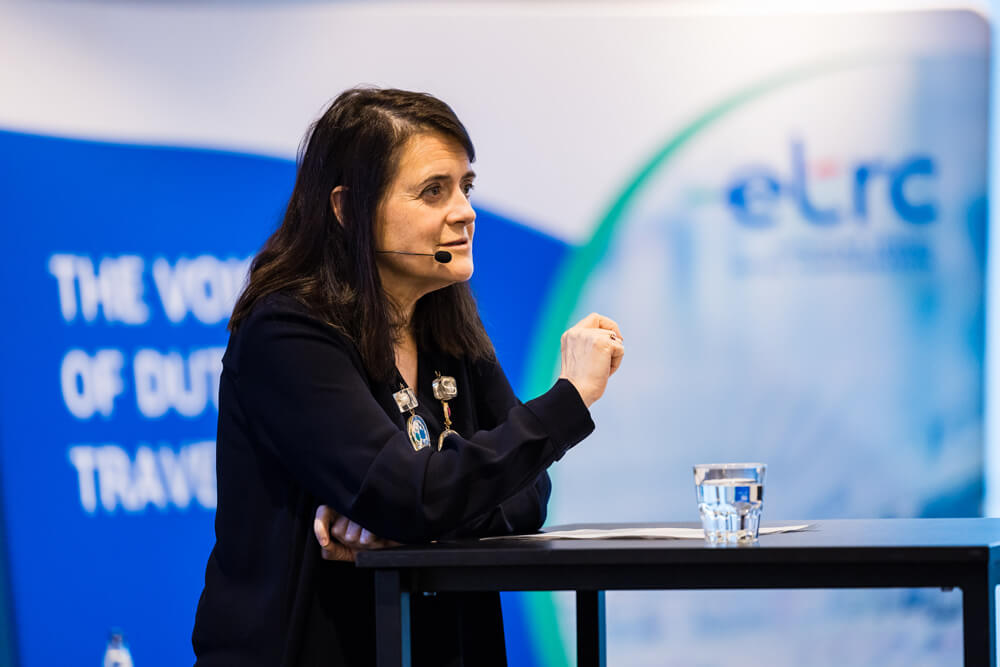
Addressing ETRC members, Bronwen Maddox, Director and CEO of Chatham House, offers her own personal and fascinating take on the state of global geopolitics and its fault lines, the US-China relationship, economic volatility and conflict in the Middle East and Ukraine, fresh from a trip to the World Economic Forum in Davos.
In wines & spirits, Simon van Moppes, Managing Director GTR Europe & Americas, Pernod Ricard, flagged the current soaring interest in tequila and mezcal in duty free and travel retail.
Super-premium and prestige segments account for a sizeable portion of EMEA sales, with duty free the number two shopping channel for HNWI/affluent customers, ETRC members heard.
Alongside pinpointing the influence of staff and intelligent store design, van Moppes added: “My message is price remains absolutely critical – no matter the price point.”
Addressing the elephant in the room, Camelia Dau, Head of Marketing Travel Retail at Ferrero pointed to the cost of cocoa, with the price per metric ton rising from circa $5,000 last year to $11,000 today. Inclement weather and disease remains a new reality for the cocoa sector in an inflation-ravaged environment.
A look to the future
For travel retail, she stated: “Every second in the airport counts; the airports are fighting for share of attention. We need to find new ways to find and reinvent penetration in store.”
She went on: “Gen Z are disengaged; they find travel retail stores outdated. They are digital natives and all their experiences are through their phone.”
Sustainability can be brought to life through gamification in TR, she continued, and there is an abundance of opportunity to engage Gen Z.
Banu Eksi, Global External Affairs Manager Duty Free, Philip Morris International offered a tobacco perspective.
She said taxi-driven price increases in the domestic market have buoyed the duty free industry.
This has been simultaneously buffered by the travel rebound and expansion of basket sizes.
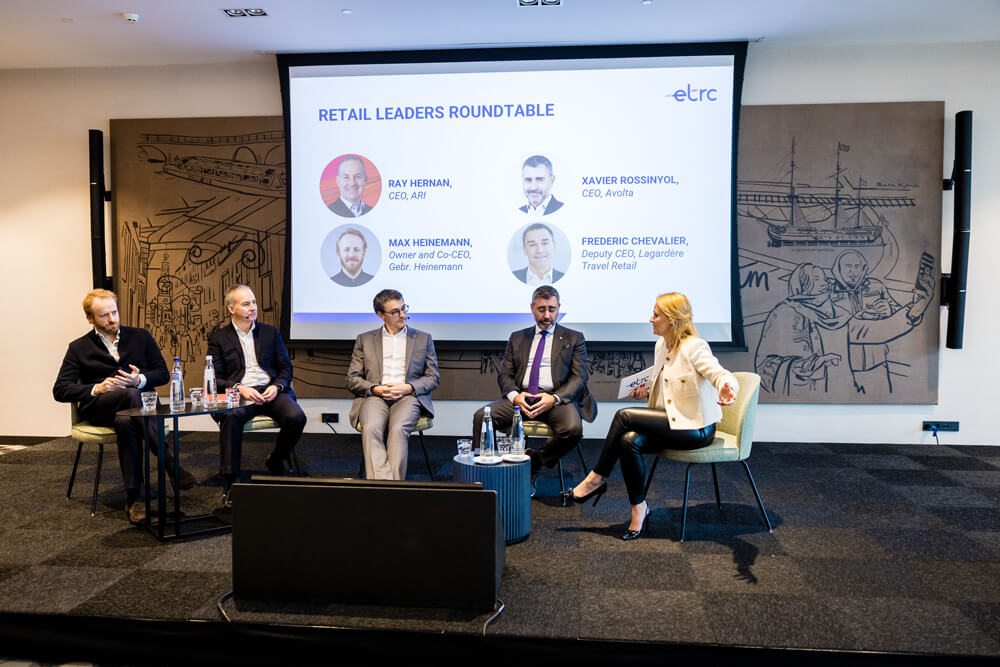
Senior figureheads from Avolta, ARI, Lagardère Travel Retail and Gebr. Heinemann did not hold back in airing their views on the precarious state of the concession model, lack of actionable data and gulf between dwell and tillpoint sales at airports and other travel retail channels.
Key trends remain the evolution of legal-age nicotine users, new products and experiences, she added, while nodding to the recent FDA approval of ZYN’s nicotine pouches.
Following a thought-provoking and dynamic exchange of views from those at the top of Gebr. Heinemann, ARI, Lagardère Travel Retail and Avolta (see link higher up for coverage), Dr Marc Schumacher, Futurist & CEO of Media Pioneer Publishing AG took to the stage to deliver the closing keynote.
Titled, ‘Unlearn what you have learnt: understanding the new market paradigm’, Schumacher wrapped up proceedings with a quick-fire reality check of the pace of societal change and how it shapes decision making.
He referenced the concept of ‘de-habitualisation’, accordingly, a perma-crisis in which society questions established habits and routines and places a radical focus on individual wellbeing and saving time.
Since Covid, societies have faced a series of ‘tipping points’ in which people have adapted to new realities, in fitness, wellness and other areas, he said.
The impact of technology has had a marked effect on the expectation of customers, for instance through blockchain, mobile/5G, AI and cloud computing.
He spoke about the post-future hangover and the level and intensity of change today being different from in the past.
Citing the so-called ‘Turkey illusion’ cognitive bias referring to an impromptu break in the manner of an accepted trend, he used this to challenge management models that are not fit for purpose.
He also spoke about the trending phenomenon of ‘funflation’, where consumers are prepared to shell out on experiences, and urged travel retailers to think about selling other things in stores.
The modern-day zeitgeist is one in which consumers expect unique experiences, which in turn funnels into their need for self-expression in a world of instant gratification, he concluded.
Identifying the new marketing paradigm, he said there is a need to shift away from product to lifestyle.
He added that offline retail environments are “back in the game”, particularly in the case of premium experiences and maintained that dwell time doesn’t equate to attention time and convenience and experience are king.
All photos courtesy of Richard Theemling Photography.

 Trbusiness. The travel retail Trbusiness. The magazine for global retail and duty free professionals.